Berserker Lyrics (English Translation) by Kid Yugi is a latest Italian song from Anche gli Eroi Muoiono in the voice of Kid Yugi. Its music too is composed by singer while brand new Berserker song lyrics are also written by Kid Yugi.
Kid Yugi’s Berserker crashes into the rollout of Anche gli Eroi Muoiono as a raw mission statement, arriving at a moment when Italian rap is leaning harder into extremes. Released as a key single ahead of the album, the track feels deliberately placed early in the narrative, setting a brutal tone for what follows. The production, handled by Ill Santo and KT Kings, is skeletal and oppressive: blunt drums, dark melodic fragments, and a cold mix that leaves Yugi’s voice exposed, almost confrontational, like a cipher recorded under flickering neon.
There’s no soft entry point. Yugi spits in long, volatile stretches, switching between grotesque humor, suicidal ideation, street reportage, and warped pop culture flexes. His vocal style is dry and unromantic, letting the bars land like blunt objects. Berserker mode isn’t a metaphor so much as a psychological state: rage as fuel, survival as compulsion.
Within his career arc, the song reinforces Yugi’s role as an anti-hero singer, sharper and less interested in redemption. Fans clocked it instantly as one of his most unfiltered records, and as a scene-setter, it frames the album as a world where even winners bleed.
Berserker (English Translation) Lyrics
[Intro]
(Gyeah)
[Verse]
When I smoke opium, I fall asleep, I take a power nap
In the game I’m with the sharks, we’re Def Jam
Four m@sturbations a day with porn, I’m back to being a nerd
I don’t feel my d!ck like Ken for the whole weekend
A quarter is really enough for me and I go into REM sleep
I’m sorry, but the sound engineer cries when I’m recording
If death awaits me at night, I dance with Giselle
I terrorize from west to east like Chen’s scream
If things go wrong, I’ll hang myself, I won’t start over from three
I’ll come back like a zombie and then maybe I’ll start with you
Born miserable, but now I’m winning big like a king
The voice of the slums, Fabrizio De André
When I drink too much, I become a monster, the new Ben 10
By now I think it’s clear that Massafra is not Bel Air
These scumbags want to do to me what they did to Belén
The world sucks, drügs sell more than a bestseller
Idiot, I’m True Religion, I’m not H&M
I want a powerful woman like Angela Merkel
If I have a problem with someone, I call Uncle Fester
My pain isn’t fake, I’m not a wrestler
I vent with food, more donuts than Winchester
I’ve seen more brown than a heroin addict in Mestre
We play with our hands, we’re like beasts
You talk about my rap, the question is: “In what capacity?”
I have my back covered from Tricase to Vieste
A lie, much more than that: from Syracuse to Trieste
People don’t listen again, at most they resent it
I only think about committing suicide, windows barred
I get horny thinking about women like when I was twelve
Antiepileptics taken without prescriptions
I’ve written a thousand tracks and I’ll tell you honestly
That I don’t consider even half of them decent
I’m filled with rage, I’m in berserker mode
Luck only kisses me if I get herpes
Rappers get hyped when they see a Kalashnikov
Go down to Southern Italy and there’s one in every building
This is proof that there’s no competition
That I burn the opposition, Yung 3p Inquisition
They arrested my brother after a search
He only has two hands, but he was carrying three guns
Passion becomes work, work becomes obsession
And it’s not just a show, I feel a strong oppression
A warrior just dies, he doesn’t enjoy retirement
Swords cross, all the tension explodes
And heroes die
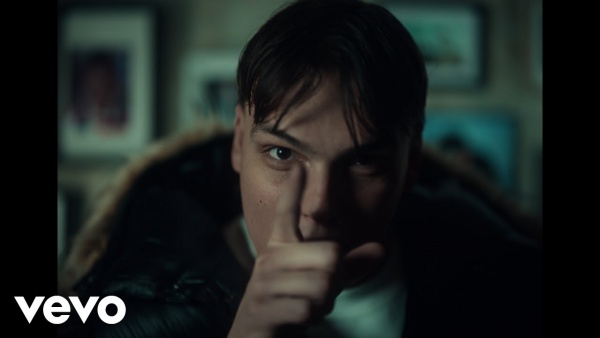
Berserker (English Translation) – Anche gli Eroi Muoiono Video
Kid Yugi Songs
Berserker (English Translation) Lyrics Meaning
[Intro]
This opening sound works like a raw vocal cue. It sets the mood immediately, like a grunt before a fight. It tells you the artist is stepping into a heightened mental state, aggressive, alert, and unfiltered, without needing to explain anything yet.
[Verse]
In this long verse, Kid Yugi opens a window into a mind that never really rests. He jumps straight into habits of escape and numbness, talking about substances and sleep not as pleasure but as survival tools. Rest comes in short, artificial bursts, suggesting exhaustion rather than peace. When he talks about being in the game with sharks and name‑drops a legendary label, he’s placing himself in a dangerous industry where only predators thrive. It’s confidence mixed with awareness that this world eats people alive.
He quickly shifts into crude, self‑degrading humor, using s*xual imagery to show boredom, loneliness, and regression. It feels intentionally uncomfortable, like he’s mocking himself for slipping into empty routines. There’s also a sense of emotional numbness, where even physical sensations feel distant. Small amounts of dr�gs knocking him out hint at a fragile mental balance. When he mentions the sound engineer crying, it’s half a joke and half a flex, suggesting his recording sessions are chaotic, intense, and emotionally heavy.
Death shows up early and casually. Instead of fear, he treats it like a dance partner, which makes it more disturbing. Violence and terror are exaggerated through pop culture references, turning him into a mythic figure spreading fear across regions. When he talks about hanging himself if things go wrong, it’s not framed as a cry for help but as a brutal, nihilistic thought pattern, showing how casually suicidal ideas pass through his head. The zombie image reinforces this idea of dying and coming back, stuck in cycles, unable to reset life like a game.
He contrasts a miserable birth with current success, framing his rise as almost unnatural. Calling himself the voice of the slums while referencing a legendary Italian songwriter ties street realism to poetic tradition. Alcohol turns him into a monster, suggesting loss of control and shame. He’s very clear about his background, emphasizing that where he comes from is nothing like glamorous, TV‑style wealth. The mention of celebrities being torn down reflects paranoia and distrust, a feeling that people want to see him fail or humiliated.
There’s a sharp social critique when he says dr�gs sell better than books. It’s frustration with a broken system, followed by a class statement through clothing brands, rejecting fast fashion identity and aligning himself with authenticity and durability. Wanting a powerful woman shows admiration for strength, not submission. Calling on a creepy fictional character when he has problems hints at dealing with conflict through intimidation rather than conversation.
He insists his pain is real, not staged like entertainment violence. Food becomes another coping mechanism, replacing emotional release with excess. When he talks about seeing more dr�gs than an addict, it paints a bleak picture of his environment. Fighting with hands like beasts brings things back to primal survival. He questions critics, challenging their singerity to judge his art.
Geographic references stretch across Italy, building the idea of loyalty, protection, and networks. He then undercuts it by calling it a lie, suggesting paranoia and mistrust even within those alliances. People don’t truly listen, they just grow resentful, which deepens his isolation. Suicidal thoughts return, now paired with images of confinement, like windows barred, reinforcing mental imprisonment.
S*xual thoughts return in a childish way, showing emotional stagnation. Unprescribed medication points to self‑medication and neglect. He admits to creating endlessly while being deeply dissatisfied with himself, revealing perfectionism mixed with self‑loathing. Rage becomes his dominant fuel, the berserker state where control is replaced by destruction.
Luck feels cursed, success tied to pain. Guns are normalized, especially in the south, showing how violence blends into daily life. He declares no competition, framing himself as an inquisitor burning rivals. The arrest of his brother grounds everything in reality, showing how crime and law enforcement directly affect his family. Passion turning into obsession explains the cost of his grind. The final lines compare life to endless battle, where warriors don’t retire and heroes don’t survive, only fall.
Berserker (English Translation) Song Detail
| Song Title | Berserker (English Translation) |
| Album | Anche gli Eroi Muoiono |
| Singer(s) | Kid Yugi |
| Musician(s) | Kid Yugi |
| Lyricist(s) | Kid Yugi |
| Release Date | December 17, 2025 |
| Label | EMI Records |
| Language | Italian |
FAQs
Q. Who has sung Berserker (English Translation) song?
A. Berserker (English Translation) song is sung by Kid Yugi.
Q. Who wrote Berserker (English Translation) lyrics?
A. Berserker (English Translation) lyrics are penned by Kid Yugi.
Q. Who has given the music of Berserker (English Translation) song?
A. Berserker (English Translation) music is composed and produced by Kid Yugi.
“This concludes the lyrics of Berserker (English Translation)” by Kid Yugi. If you like this song please share it with your friends and family in USA. If you find any errors in it, please feel free to submit the correct version via the Contact Us section.